The Festival of the Iron Furrow – RPG Blog Carnival
Hard to believe the month is almost over, and I’ve been neglecting my hosting duties by not including something of my own, I present to you . . . .
The Festival of the Iron Furrow: Waking the Land
In the deepest parts of winter, the land doesn’t just sleep; it enters a coma. The earth turns hard as iron, the grain spirits retreat deep underground, and the world feels gray and lifeless. To bring the spring, you cannot simply wait for the sun to return. The work as to be woken up. You have to shout at the soil, feed it, and break the iron crust.
For this month’s RPG Blog Carnival, focused on Feasts and Festivals, we are looking at a celebration of renewal. Drawing inspiration from the chaotic noise of the Roman Lupercalia, the earthy mysticism of Druidic Germanic rites, and the communal labor of medieval Plough Monday, we present a festival not of idle celebration, but of magical labor: The Festival of the Iron Furrow.
The Lore: The Moon of the First Thaw
Unlike solar festivals that rely on the equinox, the Iron Furrow is timed to the lunar cycle. It occurs on the first full moon after the ground has thawed enough to sink a spade one inch deep.
The premise is simple but vital, the land is anemic after the long winter. It is cold, pale, and weak. Before seeds can be planted, the soil must be infused with “heat” and vitality. In ancient times, this might have been done with blood, but in this age, the village uses a symbolic, alchemical substitute known as Iron-Mead.
The Ritual Components
The Iron-Mead
Months ago, at the start of winter, the village brewers filled heavy clay jars with a special mixture: red beets, crushed hawthorn berries, dark honey, and mild spices. These jars were not stored in a cellar, but buried in the fields.
Over the winter, the earth “held” the brew. Now, at the start of the festival, the jars are dug up. The result is Iron-Mead: a thick, deep-red, earthy alcohol that smells of soil and fermentation. It looks like blood, but it tastes like life. The mead is served warm. It stains the mouth red. When spilled on the ground, it steams in the cool spring air.
The Great Plow
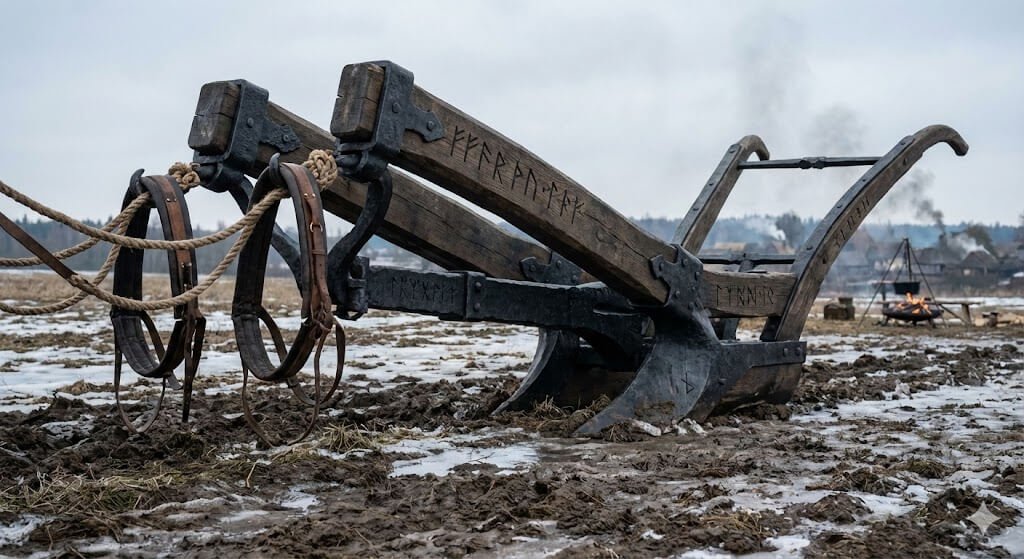
The centerpiece of the festival is a massive plow made of black iron and dark oak, blessed by local druids or clerics of agriculture. It is too heavy for even a pair of oxen to pull.
The ritual requires the “First Furrow” to be cut not by beasts of burden, but by the people. The strongest members of the village (and any visiting adventurers) harness themselves to the Great Plow. They must drag it from the village square, down the main road, and cut a single, continuous furrow around the perimeter of the primary planting field.
The Atmosphere
This is not a polite, quiet affair. This is a “Waking” festival.
- The Uproar: As the plow team heaves against the ropes, the rest of the village follows behind banging drums, ringing cowbells, and shouting. The noise is intended to startle the sleeping spirits of the earth and drive away the “Winter Hags” (spirits of frost).
- The Look: Villagers wear garlands of dried winter wheat mixed with the first green shoots of spring. Faces are painted with stripes of the red Iron-Mead.
- The Food: This is a feast of storage. The menu consists of root vegetables roasted in fire pits, salted meats saved for this occasion, and hard cheeses. It is heavy, hearty fare designed to fuel the hard work of planting.
Adventure Hooks: Things Going Wrong
While the festival provides flavor, a Game Master needs conflict! Here are a few ways to turn the Festival of the Iron Furrow into an encounter or a full adventure.
Hook 1: The Refusal
The Setup: The winter has been harsh, and the local spirits are not ready to wake up.
The Conflict: As the PCs help drag the Great plow, the temperature plummets. The mud in front of the plow freezes solid, requiring Strength checks to break through. Ice Mephits or a bitter Bheur Hag materialize from the frost, attempting to shatter the plow and freeze the Iron-Mead.
The Goal: The PCs must defend the plow team and keep the procession moving. If the plow stops moving for more than a few minutes, the frost wins, and the harvest is cursed.
Hook 2: The Hunger Below
The Setup: The Iron-Mead is potent. Its magical scent permeates the soil, simulating the smell of rich, defenseless prey.
The Conflict: The “Waking of the Land” works too well. The vibrations of the heavy plow and the smell of the mead attract subterranean predators. Ankhegs, Bulettes, or Giant Badgers burst from the earth, frenzied by the scent.
The Goal: The PCs must act as the vanguard. They cannot simply kill the beasts; they must lure them away from the defenseless villagers harnessed to the plow without ruining the First Furrow.
Hook 3: The Crooked Furrow
The Setup: A rival village or a vengeful fey has cursed the Great plow. It feels impossibly heavy, and the harnesses seem to writhe like snakes.
The Conflict: This is a non-combat encounter. The village strongmen are failing. The PCs must step in to pull the plow.
The Mechanics: Run a Skill Challenge.
- Athletics (Strength): To keep the heavy iron moving through the thick mud.
- Nature/Survival: To read the lay of the land and avoid large rocks that could snap the blade.
- Performance/Intimidation: To shout the “Waking Chants” loud enough to counteract the curse.
The Stakes: If the furrow is crooked or the circle is broken, the village believes they will starve next winter. They will look to the PCs to fix the curse they failed to prevent.
The Festival of the Iron Furrow allows you to ground your fantasy world. It shows the players that magic isn’t just fireballs and magic missiles; it’s the sweat on a farmer’s brow and the hope that the earth will provide one more year of life.
So, pour the mead, grab the rope, and pull. The land is waiting.
May your dice roll well!
For more information about the RPG Blog Carnival, including info and signing up to be a host, be sure to check out the hub page and the Carnival Archive, which has links to a treasure trove of information from our past seasons.
This is very cool! I love the giant jars of iron mead. I can see a more somber festival in the late fall where the ingredients are combined and the jars buried.
Glad you enjoyed it.
Hmmmm I wonder if this is celebrated the next village over and if it comes before or after Weasel Stomping Day